Bulk heat
The pellet unit handles the hard work of heating cold water.
About the system
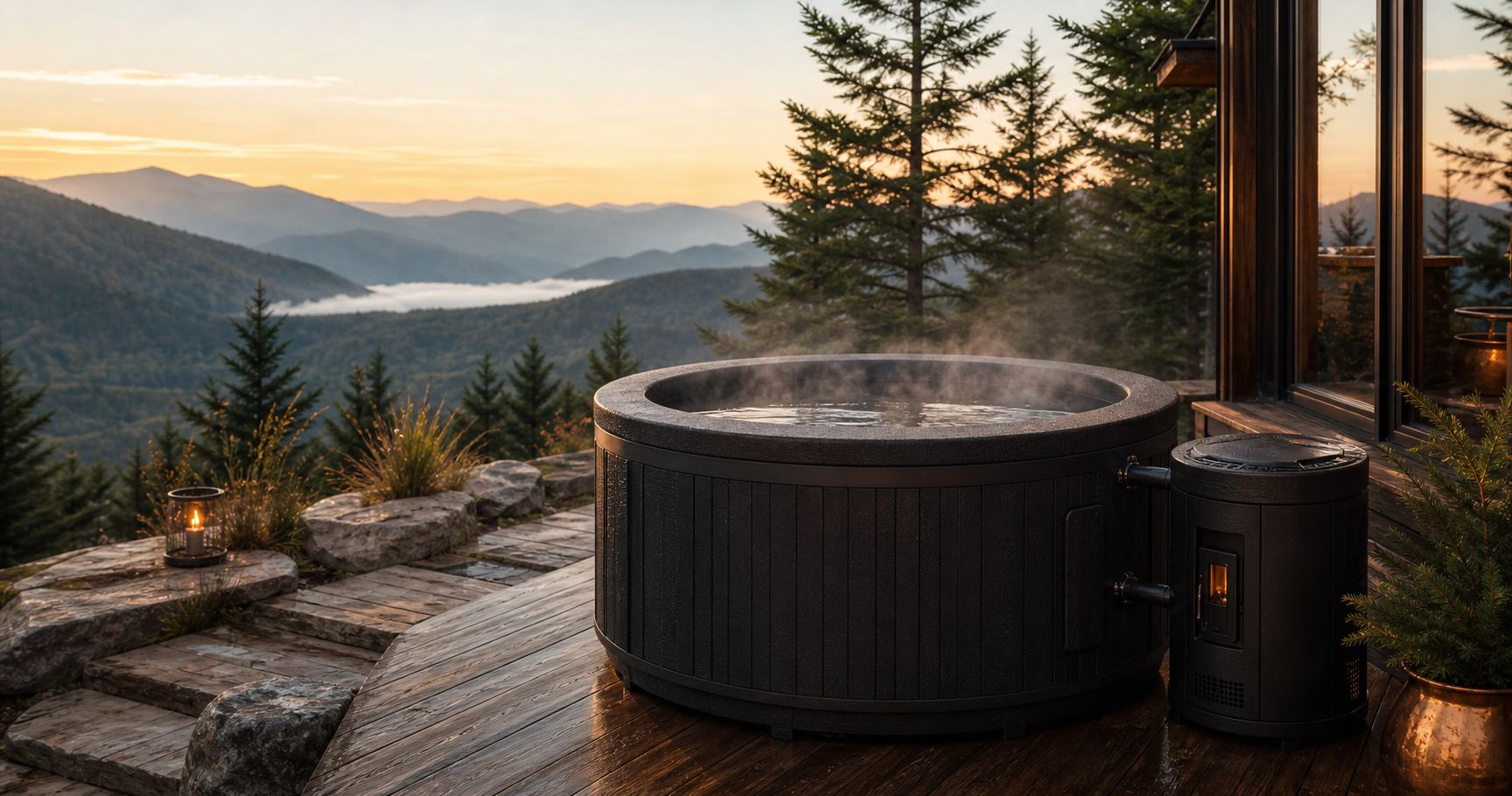
Rowkai’s proposed architecture uses pellet heat for the heavy lift, a heat exchanger to protect the tub water, a small buffer tank to capture leftover heat, and electric trim heat for exact comfort.
The basic idea
Pellet systems work best when they can run a deliberate, clean cycle. Instead of short cycling for every small temperature drop, Rowkai is being designed around a modest insulated buffer tank that can absorb the tail end of a burn and release that heat later.
The pellet unit handles the hard work of heating cold water.
A buffer tank captures useful heat when the tub stops asking for more.
A small electric heater can keep the final temperature steady.
How it operates
The boiler water and spa water should stay separate. That keeps chlorinated or brominated hot-tub water out of the boiler, valves, pump, and buffer tank.
Sequence
A modest buffer may be enough
If a properly sized pellet unit produces 30,000 BTU/hour and needs another 10 minutes to finish cleanly after the tub stops asking for heat, that tail heat is about 5,000 BTU. A 20 gallon buffer rising 30°F stores about the same amount.
Actual sizing depends on burner output, minimum runtime, shutdown heat, insulation, and allowable buffer temperature range.
Summer operation
In warm weather, the tub may only need occasional heat. The ideal behavior is not five-minute pellet starts. It is one clean cycle that warms the tub, charges the buffer, and lets stored heat carry the water for hours afterward.
The tub drops below the lower comfort band.
The boiler heats the tub back to target temperature.
Remaining heat charges the buffer for later maintenance.
Protection details
These are design requirements for the concept, not a final production specification.
The Rowkai architecture
That is the target: pellets for efficient bulk heating, a 20–40 gallon thermal buffer to catch the tail end of the burn, and electric heat to hold exact spa temperature when starting another pellet cycle would be wasteful.